A construction dumpster is a container you load yourself over the life of a job, it is not junk removal, where a crew loads for you. On a Tallahassee jobsite the size choice tracks the debris volume: the 10-yard ($595)…
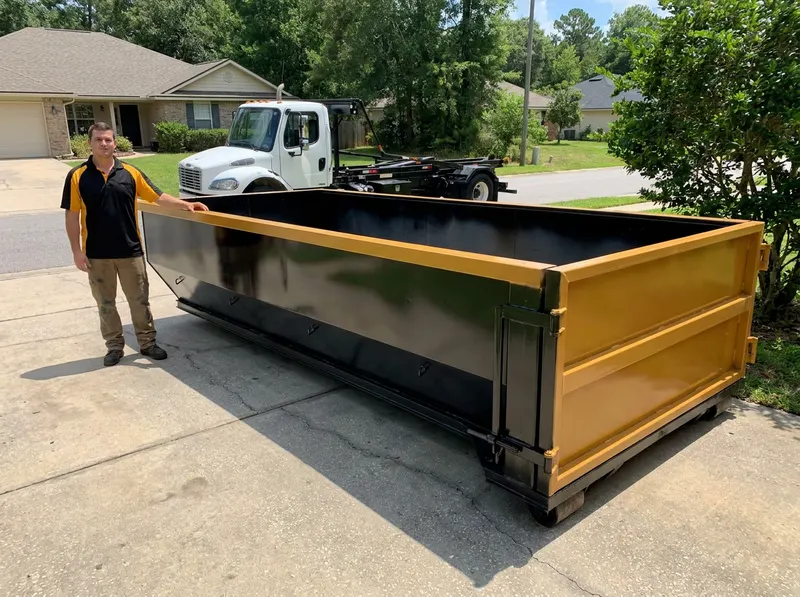
A construction dumpster is a container you load yourself over the life of a job, it is not junk removal, where a crew loads for you. On a Tallahassee jobsite the size choice tracks the debris volume: the 10-yard ($595) holds roughly 4 pickup-truck loads and suits a bathroom gut or a single-room remodel, the 20-yard ($695) fits a kitchen tear-out or a garage build, and the 40-yard ($895) handles a full-house renovation or a large framing job. Roofers pull a different lever, asphalt shingle debris is heavy, and a residential tear-off of 2,000 to 2,500 square feet usually loads into a 15-yard ($650) or 20-yard because weight caps out before the box fills. The trade-off on the driveway is footprint versus haul frequency: a 40-yard swallows the whole job in one container but eats most of a two-car pad, while a smaller box leaves room to park but may need a swap-out mid-project. If it's a single-room cleanout, choose the 10-yard; if it's a roof tear-off, choose the 15 or 20; if it's a whole-house remodel or new construction, choose the 30 or 40.
Step 1: call with the address and the type of work. Step 2: our team recommends a size and confirms the flat price against the list, the number quoted is the number you pay, because tonnage and fuel are already baked in. Step 3: we spot the container where you point, and on the tight lots common in Killearn Estates, SouthWood, and Golden Eagle that means talking placement before the truck arrives, HOA rules and narrow drives under Tallahassee's live-oak canopy leave little margin. Step 4: you load over your rental window. Step 5: we haul it to a permitted facility. Mixed C&D loads are sorted for recovery where possible; concrete, metal, and clean wood are recyclable streams tracked under the state's solid waste program at the Florida Department of Environmental Protection, and shingle and gypsum handling follows guidance the National Demolition Association publishes for the trade.
Contractors working Midtown infill, Myers Park additions, and Frenchtown rehabs tend to run a 20-yard as the everyday box, big enough for framing and drywall waste, small enough to fit a working lot with a dumpster and a materials staging area side by side. On Betton Hills and Lafayette Park remodels the older lots and mature trees make placement the real decision; a container set wrong blocks the very access the crew needs. Overloading past the fill line is the common jobsite error, a heaped roll-off cannot be legally hauled and the Federal Motor Carrier Safety Administration load-securement rules require the load to ride below the rails. Keep C&D separate from banned items: no paint, solvents, or aerosols (routed instead through Leon County household hazardous waste collection), no tires, no wet concrete washout, and no appliances containing refrigerant, which the EPA regulates under Section 608. For jobsite housekeeping, the OSHA construction debris standard treats scrap and clearing as a fall and struck-by hazard, which is why a dedicated container beats an open pile. Weather is the local wildcard, after a storm, tear-off and cleanup debris spikes across Waverly Hills and Indianhead Acres, and FEMA debris-management guidance separates construction waste from vegetative and hazardous streams, so keeping the roll-off to C&D only keeps disposal clean and the price flat.
Every job gets a firm, written price after an on-site visit.
Tell us about your construction & c&d dumpster rental job in Tallahassee and we'll send a clear, written quote, usually the same day.
 Kenny Dumpster Rental